USD $
AFN ؋
EUR €
ALL L
DZD د.ج
XCD $
AMD դր.
AWG ƒ
SHP £
AUD $
AZN ₼
BSD $
BDT ৳
BBD $
BZD $
XOF Fr
BOB Bs.
BAM КМ
BWP P
BND $
BIF Fr
KHR ៛
XAF CFA
CAD $
CVE $
KYD $
CNY ¥
KMF Fr
CDF Fr
NZD $
CRC ₡
ANG ƒ
CZK Kč
DKK kr.
DJF Fdj
DOP $
EGP ج.م
ETB Br
FKP £
FJD $
XPF Fr
GMD D
GBP £
GTQ Q
GNF Fr
GYD $
HNL L
HKD $
HUF Ft
ISK kr
INR ₹
IDR Rp
ILS ₪
JMD $
JPY ¥
KZT ₸
KES KSh
KGS som
LAK ₭
LBP ل.ل
CHF CHF
MOP P
MWK MK
MYR RM
MVR MVR
MUR ₨
MDL L
MNT ₮
MAD د.م.
MMK K
NPR Rs.
NIO C$
NGN ₦
MKD ден
PKR ₨
PGK K
PYG ₲
PEN S/
PHP ₱
PLN zł
QAR ر.ق
RON Lei
RWF FRw
WST T
STD Db
SAR ر.س
RSD РСД
SLL Le
SGD $
SBD $
KRW ₩
LKR ₨
SEK kr
TWD $
TJS ЅМ
TZS Sh
THB ฿
TOP T$
TTD $
UGX USh
UAH ₴
AED د.إ
UYU $U
UZS so'm
VUV Vt
VND ₫
YER ﷼
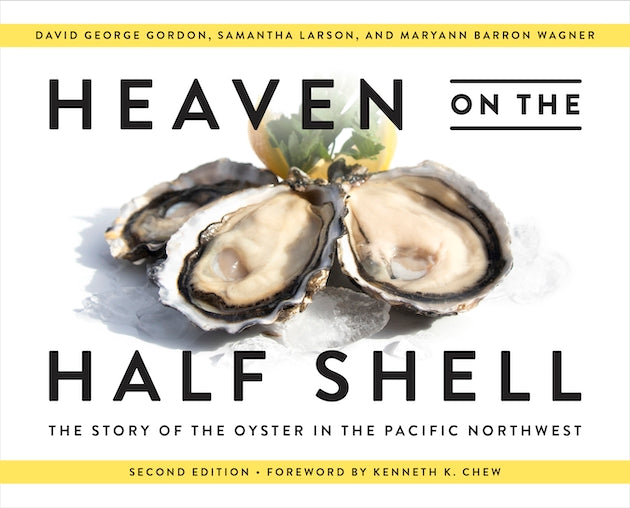
Revised Edition.
Foreword by Kenneth K. Chew.
Heaven on the Half Shell offers a thoroughly researched and richly illustrated history of the Pacific Northwest’s beloved bivalve, the oyster. Starting with the earliest evidence of sea gardens and clam beds from 11,500 years ago, this book covers the history of oyster cultivation through contemporary aquaculture in coastal Washington, Oregon, British Columbia, northern California, and southeastern Alaska.
Generations of oyster farmers, Native and non-Native, have weathered many challenges to continue the harvest. Their vivid individual accounts are braided together with significant history, such as the major contributions of Japanese immigrants prior to World War II and the 1994 Rafeedie decision that affirmed shellfish harvesting rights held by Northwest tribes. The book also sheds light on the innovations that made oysters an enduringly popular food, from the creation of so-called sexless oysters that could be consumed year-round to breakthroughs in contemporary oyster cuisine.
Now fully updated and expanded—and chock-full of “oysterabilia”—this classic text shares new insights on emerging challenges to the oyster farmer’s life as well as increased coverage of the roles of women and contemporary tribes in building this cultural tradition, past and present. Newcomers and aficionados alike will also be delighted by the carefully selected recipes, both historic and contemporary, from the region’s top chefs. As the old saying goes, when the tide is out, the table is set.